Canada Education Channel

5 Concentrations

The programme currently offers five options for study concentration areas: Epidemiology and Biostatistics (EPBI), Health Promotion and Social Behaviour (HPSB), Health Systems, Policy and Management (HSYS), Environmental/Occupational Health & Infectious Diseases (OENV/ID) and Population and Global Health (POPG). All MPH students are required to select a concentration before the term starts.
Please click here for detailed course description.

EPBI Concentration

Mission & Objectives
Epidemiology and biostatistics involve the theory and application of epidemiological and statistical science to understand determinants of disease, to prevent and control disease, to analyse biomedical problems and to further develop public health research. Epidemiology and biostatistics can be applied to a wide range of public health topics, chronic conditions, mental health problems, and social behaviours. Students can apply their training to describe the frequency and cause of disease in a population, to analyse and evaluate risk factors for a condition and examine health data for trends and to determine the effectiveness of interventions. The programme is geared towards training biomedical and sociomedical researchers and data analysts for public health agencies. Many of our graduates continue to doctoral studies or work in government agencies.
Compulsory Courses (10 units)
BIOS5002 Linear Models  (2 units)
BIOS5003 Categorical Survival Data Analysis (3 units)
EPID5002 Epidemiology II (2 units)
EPID5003 Epidemiology III (3 units)

OENV/ID Concentration

Mission & Objectives
The importance of environmental health and infectious diseases to public health is increasingly recognised in a globalised, interconnected world. Due to rapid globalisation, this is a critical area given health challenges such as infectious disease outbreaks, pollution, occupational hazards, food safety and climate change. Clinicians, hygienists, laboratory professionals and environmental safety officers need a complex range of technical and managerial skills to protect the health of populations. The modules under this concentration focus on understanding the health impact of environmental and infectious disease exposures, the prevention of adverse health consequences and the management of health risks. Many of our students have backgrounds in biomedical sciences, physical sciences, engineering sciences and even areas such as agricultural sciences. Our graduates often enter professions in environmental protection, food safety, occupational health, health policy or research.
Compulsory Courses (4 units)
OENV5010 Environmental Risk Assessment (2 units)
OENV5011 Environmental Risk Management & Communication (2 units)
Concentration Elective Courses (6 units)
Students are further required to select at least 6 units from the following electives:
INFD5002 Topics in Infection and Microbiology I (2 units)
INFD5003 Infectious Diseases of Public Health Importance: Epidemiology, Control & Policy (3 units)
INFD5004 Infection Control in Health Care and Community Setting (2 units)
INFD5005 Surveillance/ Outbreak Investigation/ Control (3 units)
INFD5006 Methods in Infectious Diseases Epidemiology (2 units)
INFD5007 Application of GIS in Public Health (2 units)
INFD5801 Major and Neglected Tropical Infectious Diseases of Poverty (1.5 units)
INFD6801 Practicum on Infectious Diseases (1 unit)
OENV5002 Lecture series on Occupational Health (3 units)
OENV5006 Air Pollution (2 units)
OENV5008 Water and Health (2 units)
PBHT5004 Tuberculosis: Biology, Control and Policy (1.5 units)
PBHT5005 Basic Human Physiology (2 units)
PBHT5801 Climate Change and Planetary Health (2 units)
POPG5011 Food Security: Local and Global Perspectives (2 units)
**Students without a biomedical background are requested to take PBHT 5005 during their studies.
*Some courses may not be offered during every academic year. Please contact the MPH office for the latest information.

OENV/ID Concentration

Mission & Objectives
The Health Promotion and Social Behaviour concentration offers modules that address behavioural, social and cultural factors that influence the health of individuals and communities. Its central themes are: to promote understanding of wider determinants of health, to identify and develop interventions that may address health disparities in society, and to provide support for individuals and populations to lead healthy lives. By applying health behavioural theories with public health assessment methodologies, students will be trained to develop, implement and evaluate public health programmes and policies. Many of the students in this concentration come from backgrounds in nursing, rehabilitative sciences, psychology and education. Graduates often go on to work in community health promotion or non-governmental agencies.
Compulsory Courses (8 units)
HPSB5002 Health Promotion Programme Planning and Implementation (2 units)
HPSB5003 Health Promotion Programme Evaluation and Monitoring (2 units)
HPSB5004 Healthy Settings OR HPSB5005 Health Communications (2 units)
HSOC5003 Nutrition for Public Health OR HSOC5103 Lecture Series in Non-Communicable Diseases as Public Health Concerns (2 units)
Concentration Elective Courses (2 units)
Students are further required to select at least 2 units from the following electives:
HPSB5004 Healthy Settings (2 units)
HPSB5005 Health Communications (2 units)
HSOC5003 Nutrition for Public Health (2 units)
HSOC5006 Medical Sociology (1.5 units)
HSOC5007 Health for Special Population (2 units)
HSOC5008 Medical Anthropology (1 unit)
HSOC5103 Lecture series in Non-Communicable Diseases as Public Health Concerns (2 units)
HSOC5210 Social Marketing Methods (1.5 units)
PBHT5001 Introduction to Qualitative Research: Theories and Research Design (2 units)
PBHT5006 Practice of Qualitative Research Methods (1 unit)
PBHT5804 Ethics, Social Justice and Global Health (1.5 units)
POPG5001 Global Health (2 units)
POPG5003 Remote and Rural Health (2 units)
POPG6801 Field Action lab (2 units)
*Some courses may not be offered during every academic year. Please contact the MPH office for the latest information.

OENV/ID Concentration

Mission & Objectives
Health systems, policy and services management is a multidisciplinary field of inquiry and practice concerned with the delivery, quality and cost of healthcare for individuals and populations. This concentration is concerned with health systems, health policy development and delivery, as well as the business and operational models of health services. Key areas of study include: the study of health systems; policy development, implementation and analysis; health services planning and development; health systems reform and financing methods; health economics; strategic thinking and decision making; human resource management; law and ethics, financial management. The modules taught in this concentration are geared towards training professionals to formulate health policies and to manage complex healthcare systems. Students should be able to apply principles and skills to the practice of administrative medicine. Students in this programme will be prepared for analyst, administration, and management positions in both private and public sectors.
Compulsory Courses (7 units)
HSYS5002 Healthcare Organisation & Management (2 units)
HSYS5003 Health Economics: Economic Evaluation (1 unit)
HSYS5004 Healthcare Systems & Policies (3 units)
HSYS5005 Healthcare Financing (1 unit)
Concentration Elective Courses (3 units)
Students are further required to select at least 3 units from the following electives:
HSYS5006 Managing in Healthcare (2 units)
HSYS5011 Health Informatics (1 unit)
HSYS5012 Human Resource Management (3 units)
HSYS5013 Financial Management (2 units)
HSYS5014 Quality and Safety Management (2 units)
HSYS5015 Medico-legal Management (2 units)
HSYS5016 Health Services Planning (1 unit)
HSYS5017 Health Innovation and Technology Management (1 unit)
HSYS5018 Healthcare Ethics (1 unit)
HSYS5019 Operation Management (1 unit)
HSYS5020 Corporate Communication and Marketing (1 unit)
HSYS5021 Advanced Organization Management (1 unit)
HSYS5022 Patient-Centred Health System (1 unit)
HSYS5023 Local Visits (1 unit)
HSYS5024 Driving Healthcare Improvement with Data (1 unit)
HSYS5026 Complaints Management in Healthcare (1 unit)
PBHT5002 Public Health Law (2 units)
PBHT5004 Tuberculosis: Biology, Control and Policy (1.5 units)
*Some courses may not be offered during every academic year. Please contact the MPH office for the latest information.

POPG Concentration

Mission & Objectives
Global public health is growing in prominence. Largescale migration, international trade agreements, urbanisation, climate change, international human rights and new integrated forms of global cyber-media all play key roles in determining the health in low and middle income countries. The need to address the health impact of disaster, to provide humanitarian aid, and to address the pervasive health inequalities that persist between high and low-income populations has never been greater. This concentration will allow students to examine these areas and gain familiarity with major contemporary global health issues. The concentration is multidisciplinary, integrating biomedical science, economics, ethics sociology, demography and policy perspectives. Students will have opportunities to put their skills into practice through international field studies and field action lab in rural China, Bangladesh, Bali and other regions. Graduates of this concentration often gain employment in international non-governmental organisations such as the Red Cross or work for international development organisations.
Compulsory Course (6 or 7units)
POPG5001 Global Health (2 units)
POPG5008 Global Health Policy (2 units)
POPG5007 Demography and Health (2 units) / BIOS5002 Linear Models (2 units)/ / BIOS5003 Categorical Survival Data Analysis (3 units)
Concentration Elective Courses (4 or 3 units)
Students are further required to select at least 4 or 3 units from the following electives:
POPG5003 Remote & Rural Health (2 units)
POPG5004 Global Reproductive Health (2 units)
POPG5005 Global Child & Adolescent Health (2 units)
POPG5006 Disaster and Humanitarian Crisis (2units)
POPG5007 Demography and Health (2 units)
POPG5011 Food Security: Local and Global Perspectives (2 units)
POPG6801 Field Action lab (2 units)
HSYS5004 Health Systems & Policies (3 units)
INFD5002 Topics in Inflection and Microbiology I (2 units)
INFD5003 Infectious Diseases of Public Health Importance: Epidemiology, Control and Policy (3 units)
OENV5008 Water and Health (2 units)
PBHT5004 Tuberculosis:   Biology, Control and Policy (1.5 units)
PBHT5801 Climate Change and Planetary Health (2 units)
PBHT5804 Ethics, Social Justice and Global Health (1.5 units)
*Some courses may not be offered during every academic year. Please contact the MPH office for the latest information.

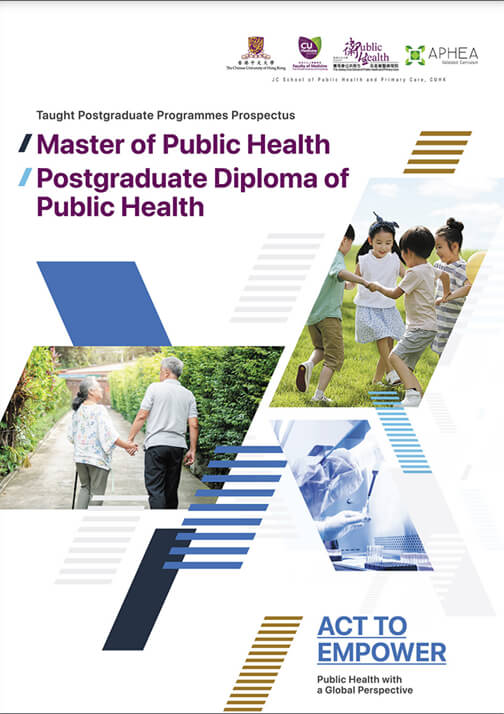
Download brochure

Download brochure